
Written by Nell VH
A strong lede tells readers exactly what happened, where, when, who’s involved, and why it matters, all in the first sentence or two.
To summarize news effectively in the lede, skip the fluff, use active verbs, and focus on the most newsworthy fact first.
Avoid jargon, vague language, or long setups. Journalists decide in seconds whether to keep reading. If your lede doesn’t deliver fast, they’ll move on.
Want your news to land coverage and get read? Keep reading to learn how to craft a clear, concise lede that works.
Key Takeaway
- Always answer the 5 Ws and H in the opening.
- Keep ledes short, active, and free of jargon.
- Start with the most urgent, newsworthy fact.
How to Summarize News Effectively in the Lede
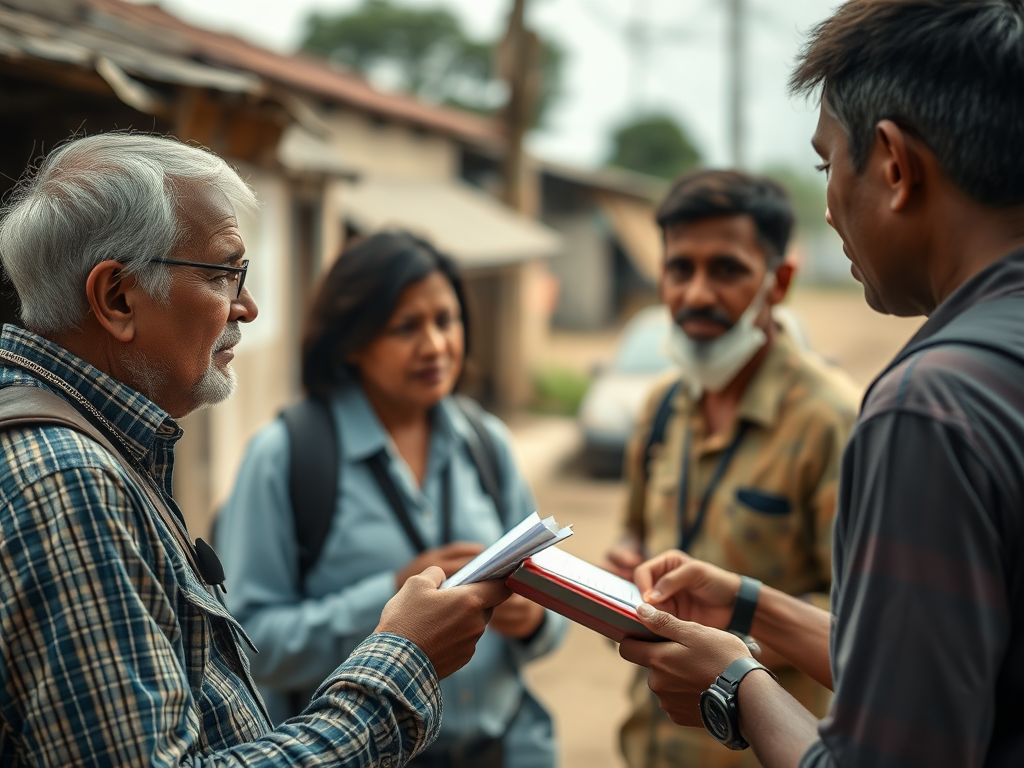
Some days, the hardest part isn’t finding the news, but deciding where to begin.
We’ve all sat staring at a blank document, the cursor blinking back, waiting for the lede that will do justice to a complicated story.
The right lede isn’t just a summary; it’s a promise to our reader. Here’s how we get it right.
Address the 5 Ws and H Clearly
A news lede stands or falls on its ability to answer the essential questions: Who, what, when, where, why, and how. We start here because, without these, the rest is just window dressing.
In practice, a lede that works might read: "Police arrested three teenagers early Monday in downtown Hartford after a string of car thefts, hoping to deter a recent surge in auto-related crimes." We’ve crammed:
- Who: Police and three teenagers
- What: Arrested
- When: Early Monday
- Where: Downtown Hartford
- Why: To deter a recent surge in auto-related crimes
- How: After a string of car thefts
We never want readers asking, “Wait, who did what?” after the first sentence. If we skip one of the Ws or the H, we usually end up rewriting anyway.
There’s nothing more frustrating than realizing, after the story’s published, that we buried the “why” in paragraph five.
Keep the Lede Concise and Focused
Long ledes lose readers fast. We try to cap things at 35 words, usually closer to 25. If we find ourselves adding clauses or wandering off the main point, that’s a red flag.
As an exercise, we sometimes read our ledes out loud. If we run out of breath, it’s too long.
If we stumble, it’s too complicated. Brevity isn’t just about word count, it’s about clarity.
- Keep sentences direct.
- Use simple structure.
- Avoid extra adjectives and adverbs.
- Cut any phrase that doesn’t move the story forward.
I remember covering a local hospital merger. The first draft of my lede was 52 words.
After three edits, it read: "City Hospital and Mercy General will merge July 1, forming Connecticut’s largest healthcare provider to cut costs and expand services."
Everything else belonged further down.
Use Active Voice and Strong Verbs
We want our readers to feel the story as it happens. Passive voice drains urgency and confuses the subject. Active constructions put the action, and the actors, up front.
Which sounds stronger?
- Active: "Firefighters rescued four people from a burning building Thursday night."
- Passive: "Four people were rescued from a burning building by firefighters Thursday night."
The first version moves. The second one stumbles.
- Use verbs like "approve," "arrest," "launch," "announce," "cancel," "warn."
- Avoid "was," "were," "has been," unless there’s no alternative.
Some of our editors circle every instance of passive voice. It’s a habit that, once broken, speeds up everything we write.
Start with the Most Important Information
Readers skim. They’re impatient. If we bury the main event, we’ve lost them by the second sentence.
Ask: What is this story about, in one sentence? That’s our lede. Everything else can wait.
- Place the key fact first.
- Don’t open with the background (unless it’s vital).
- Never start with time or place unless it’s the story’s core.
Instead of, "On Tuesday night in Springfield," we write, "A man was shot outside a Springfield movie theater Tuesday night, police say." The difference is night and day.
Avoid Jargon and Use Simple Language
We write for everyone, not just insiders. Jargon and technical language set up walls. Our job is to knock them down.
During one budget story, the city manager used the term “mill rate adjustment.”
We translated it: "Property taxes will rise by 5 percent next year under the new city budget."
No reader had to Google what that meant.
- Use plain English.
- Define technical terms only if absolutely necessary.
- Prefer short, common words.
When in doubt, we ask ourselves if a high-school freshman could understand the sentence. If not, we revise.
Create a Compelling Hook
A lede isn’t just a summary; it’s a handshake. We want readers to feel pulled in, not pushed away. Sometimes, a surprising fact or a powerful statistic works best. [1]
Some of our best ledes:
- "Nearly half of Connecticut teachers say they’re considering quitting this year, a new poll shows."
- "A record-setting 23 inches of snow buried Hartford overnight, closing schools and stranding drivers."
Hooks don’t have to be dramatic. But they do have to be relevant and true.
Exclude Unnecessary Details and Clichés
Filler words and old tropes add nothing. Clichés are like speed bumps. We avoid them because they make writing feel lazy and predictable.
We avoid:
- "At the end of the day"
- "A dark cloud hangs over"
- "As luck would have it"
- Any puns on “storm” during bad weather
Every detail in the lede must earn its place. If it’s not crucial, cut it. We can explain more in the nut graf.
Maintain Objectivity and Avoid Sensationalism
Facts win trust. Overblown language or loaded words do not. We keep our tone neutral, even when the story is emotional.
- Avoid words like "shocking," "outrageous," or "unprecedented" unless directly quoting a source.
- Don’t assume motives or outcomes.
- Let the facts speak.
We’ve all been tempted to punch up a lede with an adjective or two, but those are best saved for features, not hard news.
Writing Techniques to Enhance Lede Effectiveness
Some tricks stay with us for life. We learn them from tough editors and long nights in the newsroom. Done right, they make ledes clear, punchy, and readable.
Use Short Sentences and Parallel Structure
Long, winding sentences lose readers. Parallel structure helps ideas stick. [2]
- Break complex ideas into bite-sized pieces.
- Use repetition for emphasis: "Voters want lower taxes, better schools, and safer streets."
- Avoid semi-colons and em dashes. Periods are our friends.
One editor always said, "Write so a busy nurse on a night shift can read it in one glance." We try to remember that.
Place Key Information at the Beginning
Don’t make readers hunt for what matters. The first few words should tell them why to care.
- Lead with action or result.
- Avoid starting with background or minor players.
Example: "A bus crash killed two people and injured 14 Thursday on I-84, police said." Not: "Thursday night, police responded to a bus crash on I-84 that left two dead."
Avoid Multiple Ideas in One Sentence
Trying to cram everything into one line usually backfires. We focus on one clear message.
If a lede feels crowded, we split it:
- "Police arrested a man after a robbery at CVS. The suspect is also wanted in two other states."
Short, clear, and each idea stands on its own.
Write in Present Tense When Appropriate
Present tense makes stories feel urgent, especially for breaking news.
- "Fire sweeps through the warehouse, destroying millions in inventory."
- "Governor signs new bill to expand Medicaid."
Past tense works for stories about completed events. But for live updates or ongoing coverage, present tense is stronger.
Use Numbers or Statistics When Relevant
Numbers anchor stories in reality. They’re concrete and hard to ignore.
We use numbers when they matter most:
- "Unemployment hits a five-year high at 9.2 percent."
- "City council approves $1.2 million for school repairs."
But we don’t overload the lede with figures. One or two stats are plenty.
Limit Use of Quotes in the Lede
Direct quotes slow down the lede and often add clutter. Most quotes work better a paragraph or two down.
We use a quote only if it’s:
- Short
- Memorable
- More powerful than our summary
Otherwise, summarize first, quote later.
Revise and Edit Thoroughly
Credits: Kristina Lyman
No one writes a perfect lede on the first try. Editing is where good ledes are made.
- Read aloud.
- Ask a colleague for feedback.
- Print it out to see if anything jumps out.
Even after years in the business, we still find mistakes on the third or fourth pass.
Avoid Humor, Sarcasm, and Vague Statements
Jokes and sarcasm rarely land in news writing. We keep it straight.
- Don’t try to be clever.
- Avoid “Some say the city is in chaos”, who says?
- Make every statement clear and specific.
Types of Ledes and When to Use Them
Not every story starts the same. Sometimes we need a summary, other times an anecdote. Knowing which lede fits the news is half the battle.
Summary Lede for Hard News
Most breaking stories demand a summary lede. It’s direct and covers every major fact at once.
Example: "A 6.2-magnitude earthquake struck San Francisco early Friday, killing at least 15 people and causing widespread power outages."
We save color and context for the next paragraph.
Feature or Anecdotal Lede for Softer Stories
Some stories need a softer landing. An anecdote or scene can pull readers in before we lay out the facts.
Example: "As the sun rose over the city’s oldest bakery, Maria Gutierrez dusted flour from her apron and unlocked the door for her 50th year. She’s never missed a morning shift."
We use this style for profiles, trend pieces, or human interest stories. But we shift to summary quickly, no one likes waiting too long for the main event.
Unique Angle or Perspective
Sometimes, the story’s angle is what makes it news. We put that up front.
Example: "Unlike past budget cuts, this year’s reductions will force city schools to close two libraries and eliminate all after-school programs."
Why is this story different? That’s our lede.
Emotional Appeal When Appropriate
Not every story needs emotion, but sometimes a little humanity helps.
We use emotional ledes for stories about loss, resilience, or major community impact, but we never exaggerate.
Example: "Tears streamed down faces as hundreds gathered at the memorial for four children lost in last week’s fire."
Readers feel the weight without being manipulated.
Conclusion
To summarize news effectively in the lede, lead with the most important fact. Answer who, what, where, when, why, and how, fast.
Use short, clear language. Skip jargon. Read it aloud.
If a stranger doesn’t get it, rewrite it. A strong lede makes the difference between getting picked up or ignored.
Want help getting your story noticed? Distribute your press release with NewswireJet.
FAQ
Why is it important to answer the 5 Ws and H clearly while writing the lede?
Answering the 5 Ws and H clearly gives readers the full story fast. When you include the who, what, when, where, why, and how upfront, you help readers stay informed without confusion.
This builds trust and keeps your writing tight. Skip it, and readers might miss the point, or stop reading altogether.
It’s one of the best ways to focus on newsworthiness and avoid filler or vague details.
How can I keep the lede concise and still include strong verbs and relevant facts?
To keep the lede concise, focus only on relevant facts and use strong verbs that move the story. Limit yourself to one core idea. Avoid unnecessary details, passive constructions, and long-winded intros.
Choose clear, active words like "launched," "approved," or "rescued" to summarize action quickly. A tight, sharp lede reads better and grabs attention without overwhelming your reader.
What’s the harm in using jargon or complicated sentence structures in a lede?
Jargon and complicated sentence structures make it harder for readers to understand your story. If you avoid jargon, use plain English, and write in simple language, you make it easier to scan and more engaging.
A confusing lede turns readers away, especially when they skim. Stick to one clear idea, write short sentences, and check for accuracy without trying to sound too technical or clever.
Why should I start with the most important information and place key info at the beginning?
Readers decide quickly whether to keep reading. That’s why you should start with the most important information and place key info at the beginning.
It keeps the lede focused on the impact and avoids overloading with data or background. If readers don’t see why it matters right away, they’ll move on.
Keep the tone neutral, the language simple, and save the extra detail for later.
How can I avoid writing ledes that feel vague, redundant, or overloaded?
To avoid vague ledes, write for your audience, be specific and precise, and use concrete details. Eliminate filler words, avoid redundancy, and don’t cram multiple ideas into one sentence.
Stick to one strong angle. Test readability by reading aloud and revising thoroughly. Don’t start with definitions, humor, or background info unless it’s critical.
The goal is clarity and flow, not cleverness.
Should I use quotes in the lede, or save them for later?
Use quotes sparingly in the lede unless they’re short, powerful, and say something better than you can. Otherwise, summarize first and quote later. Avoid long quotes that slow the lede down.
This keeps your writing direct, maintains objectivity, and makes the story easier to follow. Most readers need the facts first before they care who said what.
Why does tense, structure, and tone matter when writing a lede?
Tense, structure, and tone matter because they shape how the reader absorbs the story. Use present tense when appropriate for breaking news and avoid mixing tenses. Stick to short sentences and use parallel structure to improve flow.
Keep the tone neutral and avoid editorializing, emotional language, or sarcasm. Clear subject-verb-object structure helps avoid confusing syntax and ensures the message is understood fast.
References
- https://www.investopedia.com/terms/t/trendanalysis.asp
- https://en.wikipedia.org/wiki/Wikipedia:Summary_style
Related Articles