Written by Nell VH
Crafting crisis statements & releases means delivering clear, verified, and empathetic information fast when a serious issue threatens trust and stability.
In a digital news cycle measured in minutes, delay fuels speculation and misinformation. We face moments where a data breach, safety incident, or leadership misstep demands immediate clarity.
This guide explains how we structure crisis communication to control facts, support stakeholders, and set a credible path forward. Keep reading to understand the exact frameworks, wording principles, and distribution steps that help us respond with calm authority.
Key Takeaways
- Crisis statements must lead with empathy, verified facts, and clear action commitments within the golden hour.
- A structured format prevents confusion and limits rumor spread across media and social platforms.
- Consistent follow-ups and transparent updates turn crisis response into trust rebuilding.
Crisis Statement Definition, Examples & Format
A crisis statement definition, examples & format begins with a simple truth. A crisis statement is an urgent public message issued to address a disruptive event that affects stakeholders, operations, or credibility. Unlike a standard announcement, its goal is stability, not promotion. According to Harvard Business Review, early transparency improves stakeholder confidence during high-impact incidents.
A crisis release answers five essentials. Who is affected? What happened? When and where it occurred. What we are doing now. What comes next?
Research from MIT demonstrates that false news spreads six times faster than true information, with falsehoods reaching 1,500 people approximately six times faster than truth on Twitter, underscoring why verified information and rapid, accurate communication are critical during breaking events to prevent misinformation from filling the void. [1]
We rely on a consistent structure that supports clarity under pressure. This structure also supports fast scanning by journalists and decision makers.
Common crisis formats include:
- Initial holding statement during the first hour
- Detailed crisis release after facts are confirmed
- Update statements tied to investigation milestones
Below is a simplified comparison that shows how crisis releases differ from routine announcements.
Element
Crisis Statement
Standard Release
Primary goal
Stability and trust
Awareness
Timing
Immediate
Planned
Tone
Empathetic and factual
Informative
Content focus
Impact and actions
Features and updates
This format ensures we control the narrative early while leaving room for updates as investigations progress.
Writing Crisis Statements With Clarity and Empathy
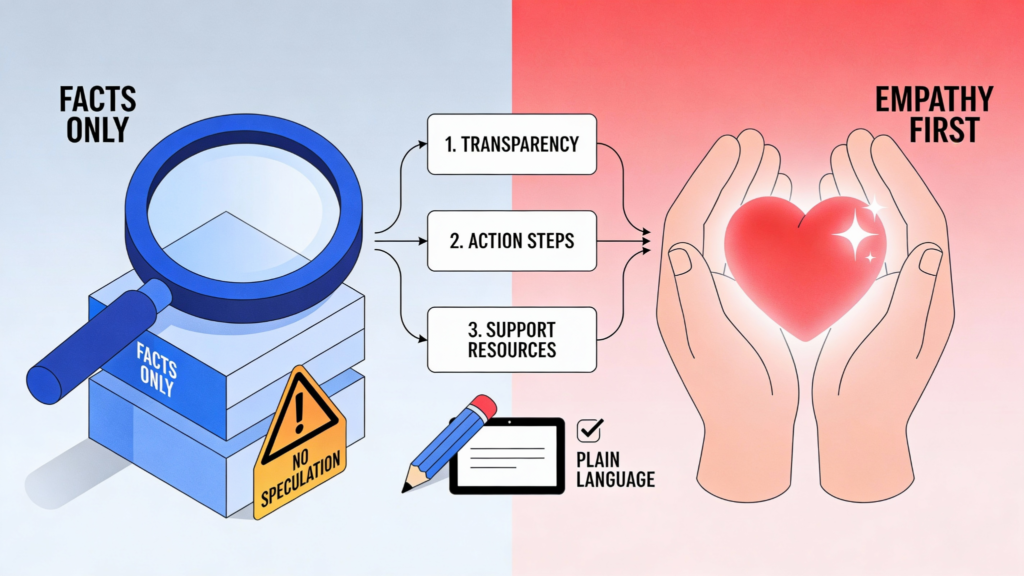
Writing crisis statements requires discipline. We start with facts only. No speculation. No assumptions. According to The Associated Press Stylebook, credibility depends on accuracy before speed, even in urgent situations.
Empathy follows facts closely. Stakeholders expect acknowledgment of impact before explanations. A short line such as “We understand the concern this situation creates for customers and employees” signals accountability without admitting unverified fault.
We also prepare three key messages before drafting. These messages guide every sentence and prevent message drift across channels.
Our three-message approach includes:
- Transparency about verified information
- Action steps crisis teams are taking now
- Support resources available to affected groups
Each paragraph stays short and direct. Plain language matters. Studies cited by Nielsen Norman Group show shorter sentences improve comprehension during stress.
Before release, we audit tone carefully. Defensive wording erodes trust. Neutral phrasing preserves credibility until investigations conclude. This balance keeps statements human while remaining responsible.
The EFA Model Crisis Framework Explained
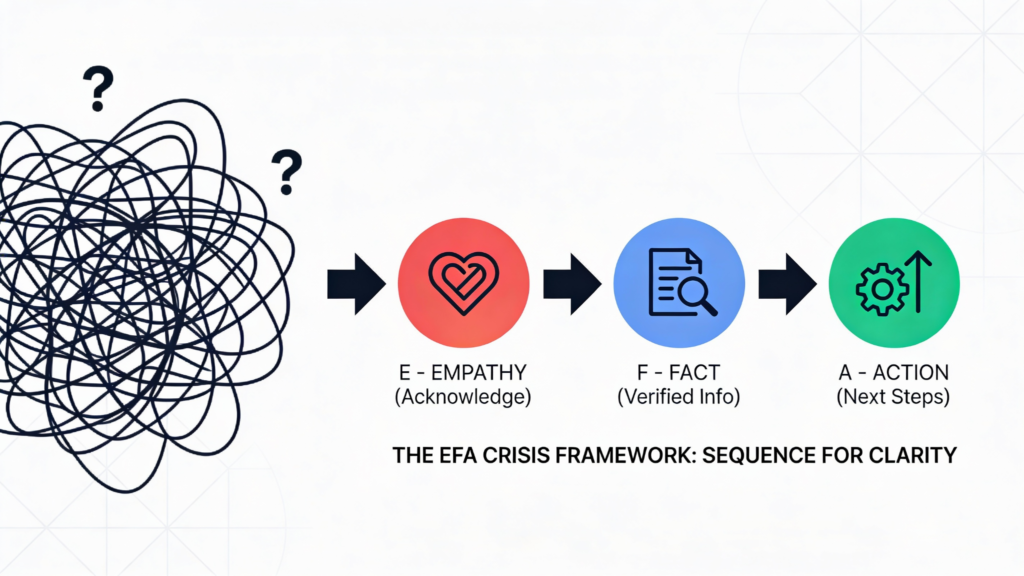
The EFA model crisis framework stands for Empathy, Fact, Action. It provides a reliable sequence when emotions are high and information is limited. Communication scholars at University of Michigan note that ordered messaging reduces perceived chaos.
Empathy always comes first. Acknowledging concern does not increase liability. It shows leadership. Fact comes next, grounded only in verified information. Action closes the loop by showing momentum and responsibility.
We apply EFA consistently across channels to maintain coherence.
EFA breakdown in practice:
- Empathy: Recognize stakeholder impact
- Fact: Share what is confirmed and what is unknown
- Action: Outline immediate and next steps
This structure reassures audiences that we are present, informed, and active.
Crisis Communication Press Release Essentials
A crisis communication press release follows a news-style format designed for rapid understanding. Editors and platforms prioritize clarity and accuracy during breaking events. According to Reuters Institute, concise leads improve pickup during crisis coverage.
We begin with a direct headline that names the issue. Avoid creative phrasing. Precision builds trust. The dateline reinforces immediacy and context.
The lead paragraph crisis section summarizes the event in one or two sentences. It includes who is affected and what actions are underway. The body then expands carefully, balancing empathy with facts.
A strong closing reassures without overpromising. We reaffirm commitment and provide contact information for updates.
Essential components include:
- Clear crisis headline and dateline
- Lead paragraph with verified facts
- Body with empathy, investigation update, and action steps
- Closing reassurance and contact info
This structure supports fast reading while preserving accountability.
Audience Tailoring and Key Messages Crisis Planning

Not all stakeholders need the same details. Audience tailoring improves relevance and reduces confusion. Research from McKinsey & Company highlights that targeted messaging increases trust retention during disruptions.
We identify primary groups early. Customers want impact clarity. Employees need reassurance. Regulators require compliance updates. Each group receives aligned but distinct messaging.
We maintain a shared message core to prevent contradictions.
Audience focus priorities:
- Customers: Service impact and support options
- Employees: Safety, stability, and expectations
- Regulators: Compliance steps and cooperation
Tailoring does not mean changing facts. It means adjusting emphasis while maintaining consistency.
Channel Distribution and Golden Hour Response
Credits: Hofstra University
Speed matters. The golden hour response refers to the first sixty minutes after a crisis becomes public. According to MIT Sloan Management Review, early communication reduces long-term reputational damage.
We release the initial holding statement across owned and earned channels at the same time. This prevents fragmented narratives.
Our distribution sequence is deliberate. Website landing page first. Press release distribution second. Social media posts last, each linking back to the primary source.
Core channels include:
- Website crisis landing page
- Press release distribution services
- Social media crisis posts
Monitoring begins immediately. Sentiment tracking tools flag misinformation and emotional shifts so we can adjust updates quickly.
Legal Review Crisis Without Delays
Legal review crisis processes must support speed. Studies from Stanford Law School emphasize that overly cautious silence increases reputational harm.
We involve legal teams early, not at the end. This allows parallel review while facts are gathered. Clear decision trees help determine what can be shared safely.
The goal is balance. Protect legal standing while preserving trust. Statements that sound evasive damage credibility more than careful transparency.
Pre Draft Templates and Investigation Updates
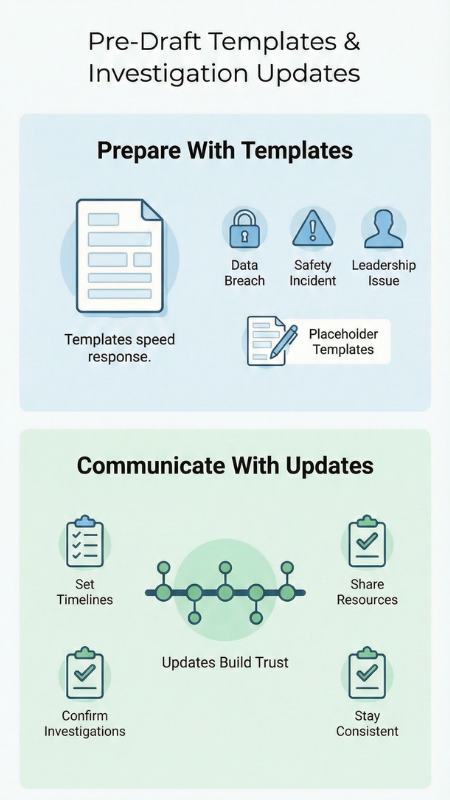
Preparation reduces risk. Pre-draft templates allow us to respond within minutes rather than hours. Templates include placeholders for facts, contacts, and timelines.
We maintain templates for common scenarios such as data breaches, safety incidents, and leadership issues. Each template aligns with EFA principles.
Investigation updates follow a predictable rhythm. Even when progress is slow, regular updates reassure stakeholders.
Effective update practices include:
- Clear timeline commitment
- Confirmation investigations continue
- Reminder of support resources
Consistency signals responsibility.
Turning Crisis Response Into Recovery Opportunity
An honest crisis response can strengthen long-term trust when it is supported by structured PR crisis and reputation management that prioritizes transparency, consistency, and accountability beyond the initial statement.
Research from the Edelman Trust Barometer demonstrates that organizations communicating clearly and following through during crises recover faster and retain stakeholder confidence, with transparency and trustworthy, fact-based information identified as critical factors in breaking cycles of distrust that erode institutional credibility. [2]
We avoid blame shifting. We avoid minimizing language unless verified. Phrases like isolated event are used only with evidence.
Leadership visibility matters. CEO sign-off on major statements reinforces accountability and seriousness.
Over time, steady updates and fulfilled commitments rebuild confidence and stabilize perception.
FAQ
What are the essential components every crisis statement should include?
Every effective crisis statement follows a structured format crisis using the EFA model crisis, Empathy Fact Action.
Start with an opening acknowledgment showing stakeholder empathy and using we understand phrasing to humanize organization response.
The lead paragraph crisis delivers key facts crises using verified information and fact-based messaging without speculation.
Include specific action steps, crisis and action commitments showing what you're doing now. Add a contact info crisis like a support hotline for affected people.
Close with a forward-looking statement offering timeline commitment for investigation update or follow-up updates.
Use plain language crisis with short sentences crisis and clear concise wording anyone can understand.
The tone balance maintains professional empathy while staying honest to crisis response. Structure it like a news style lead so it's scannable content journalists can quickly parse and quote accurately.
How quickly should organizations respond and what is the golden hour response?
The golden hour response refers to the critical first 60 minutes after a crisis breaks when you must acknowledge the situation.
This rapid response crisis doesn't mean having all answers, it means showing 24/7 readiness and working closely with authorities to investigate.
A holding statement serves this purpose, saying essentially "we're aware, we're investigating, and we care" while buying time for a complete press release crisis.
Speed matters because silence gets filled with rumor control problems and misinformation counter needs. Counter rumors early before they spread.
Your crisis communication plan should include pre-draft templates for common scenarios enabling faster response.
Even a brief statement with we acknowledge concerns prevents decision tree crisis escalation. The goal isn't perfection in 60 minutes, but presence, showing you're engaged and taking immediate action on the issue at hand.
What role does empathy in crisis messaging play and how should it be expressed?
Empathy in crisis communications isn't optional, it's foundational. The opening acknowledgment should use genuine “We” statements showing shared responsibility for people's concerns.
Phrases like we appreciate customers, we understand phrasing customer frustration, and we acknowledge concerns demonstrate stakeholder empathy without being defensive.
The body empathy facts section balances compassion with verified information. However, avoid defensiveness and blame shift tactics that undermine trust rebuilding efforts.
Your brand voice crisis should sound human, not corporate. Apology phrasing matters, say "we're sorry this happened" not "mistakes were made."
This accountability language combined with specific action commitments shows you care about recovery opportunities, not just reputation management crises.
Professional empathy means validating feelings while providing key messages crisis grounded in facts, creating closing reassurance that feels authentic and earned.
How do you structure different crisis releases for various audiences and channels?
Audience tailoring is essential, customer messaging differs from regulator update requirements and employee comms needs. Your crisis communication plan should include templates for each.
A press release crisis follows journalism standards with a crisis headline, dateline crisis, and news style lead paragraph crisis.
The social media crisis version needs shorter sentences and bullet points for mobile scanning. A website landing page gives comprehensive details with contact info crisis prominent.
Employee comms require more context about job security and support resources. Use the entity attribute value crisis approach organizing information by audience attributes, what each group needs to know.
Channel distribution strategy determines where messages go first. Internal channels beat external ones, employees shouldn't learn from Twitter.
Legal review crisis ensures regulatory compliance messaging before publication. Track sentiment analysis tools and audit messaging for message drift prevention across platforms as the story evolves.
Crafting Crisis Statements & Releases With Confidence
Crafting crisis statements & releases requires discipline, empathy, and structure. We lead with verified facts, acknowledge impact, and outline action clearly.
This approach limits misinformation and demonstrates leadership when it matters most. For teams that need a reliable way to distribute time-sensitive statements broadly and efficiently, using a platform like NewswireJet can support reach and reporting during critical moments.
References
- https://news.mit.edu/2018/study-twitter-false-news-travels-faster-true-stories-0308
- https://www.edelman.com/trust/2022-trust-barometer
Related Articles